Takumi Saito

2026/3/20
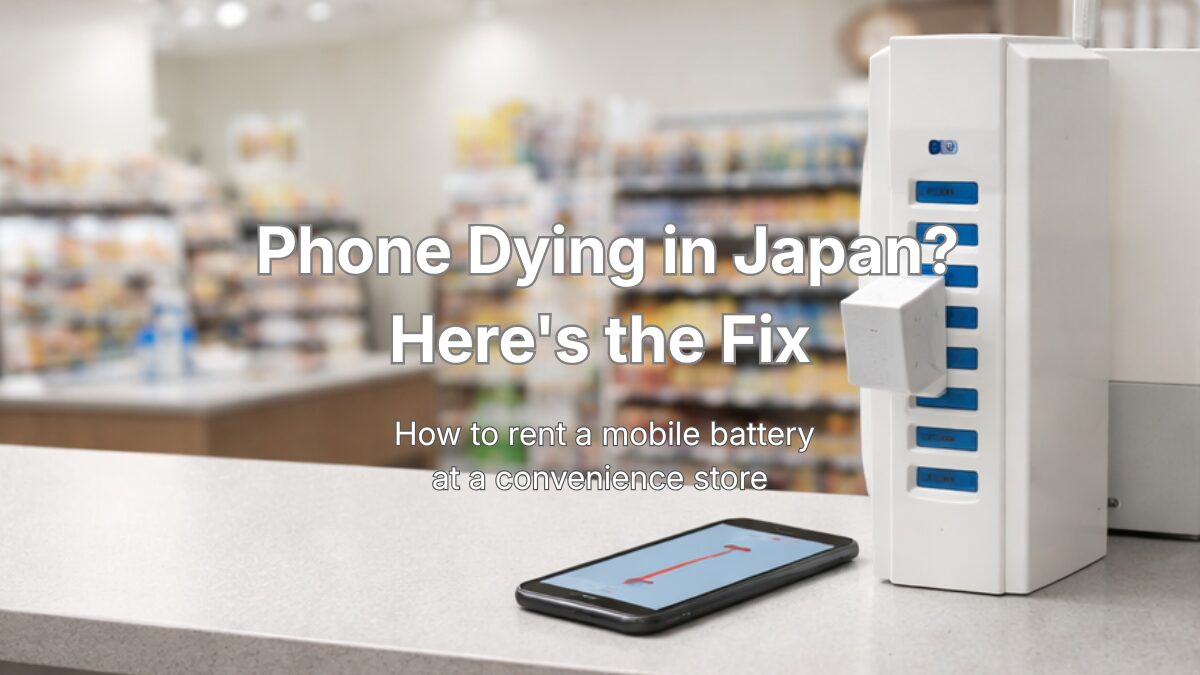
Your phone battery is running low in the middle of a sightseeing day — and you don't have a charger or a place to plug in. In Japan, there's a practical solution that most locals already know about. This page explains how Japan's mobile battery rental service works, where to find it, and what to do before your battery hits zero. What ChargeSPOT is ChargeSPOT is a short-term mobile battery rental service. Instead of hunting for an outlet or carrying your own power bank, you borrow a charged battery from a kiosk, use it while you move around, and return ...
2026/3/20 topic-digital, topic-transport
You checked Google Maps before leaving, but you're running late — even though you followed the route exactly. What happened? This page explains why Google Maps travel times can feel off in Japan, when to add extra time, and which apps locals actually use for train navigation. Why Google Maps times can feel wrong Google Maps calculates travel time based on a set of assumptions that don't always match real conditions: In practice, most travel situations in Japan involve at least one of these variables — which is why the displayed time often ends up being the minimum, not the ...
2026/3/20 topic-language
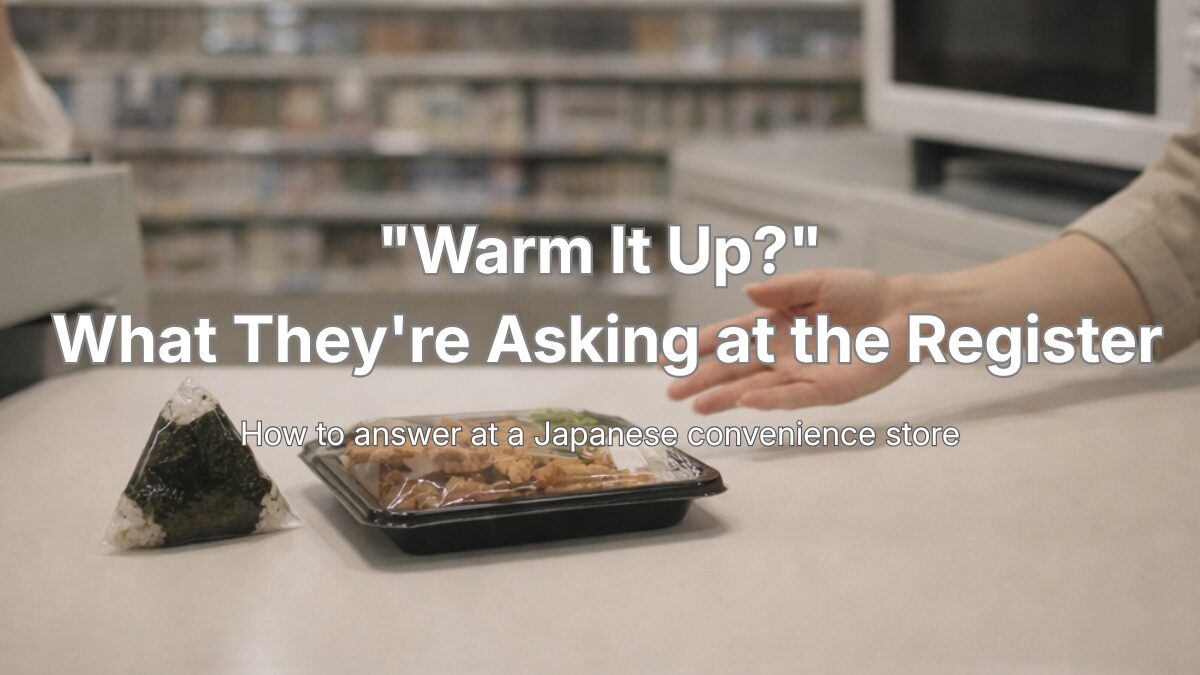
You're at a Japanese convenience store register with a bento box or onigiri, and the cashier says something you don't quite catch. Are they asking if you want it warmed up? This page explains what the question means, how to answer it, and what kinds of food can actually be heated. Why convenience stores offer this Japanese convenience stores have a microwave at or near the register, and heating purchased food on the spot is a standard part of the service. This is unique to Japan's convenience store culture — it's not something you'd typically find at a convenience store ...
2026/3/20 topic-language
Your phone rings on a Japanese train. Everyone around you is quiet. What's the right thing to do? This page explains the unwritten rule about phone calls on Japanese trains, why it exists, and how locals handle it — including what to do when you genuinely need to talk. Why phone calls aren't allowed Japanese trains are treated as shared quiet spaces. The expectation — announced on most lines — is that passengers set their phones to silent and avoid calls out of consideration for others. This isn't a legal rule, but it's one of the most consistently observed social ...

2026/3/20 season-winter, topic-health
Japan's summer heat is one thing. The humidity is another. Visitors from drier climates often find the combination genuinely difficult — not just uncomfortable, but physically draining in a way that can affect your whole trip. This page explains what makes Japanese summers so demanding, how locals manage it, and the practical steps that make a real difference. Why Japan's summer feels so intense After the rainy season (梅雨 / tsuyu) ends in early July, Japan comes under the influence of the Pacific high-pressure system — bringing sustained heat and high humidity that lasts through August. The problem with humidity ...
2026/3/20 topic-health
Getting sick while traveling in Japan is stressful enough. Finding a doctor who speaks English adds another layer of uncertainty — especially outside major cities, or late at night. This page explains how to find English-speaking medical facilities, what to do outside clinic hours, and what to bring when you go. Why English-speaking hospitals are limited Japan's medical care is high quality, but the healthcare system operates primarily in Japanese. English-speaking doctors and staff exist — particularly in Tokyo, Osaka, and Kyoto — but they're concentrated in specific clinics and hospitals, not evenly distributed. Even at facilities that advertise English ...
2026/3/20 topic-money
You're at a convenience store register and the cashier says something you don't quite catch. Are they asking if you want a bag? And do you have to pay for it? This page explains Japan's plastic bag policy, how much bags cost, and what locals do to avoid the question entirely. When did bags become paid? On July 1, 2020, the Japanese government made it mandatory for retailers to charge for plastic shopping bags. The policy was introduced to reduce plastic waste — part of a broader environmental initiative by the Ministry of the Environment. Before that date, plastic bags ...
2026/3/20 topic-money
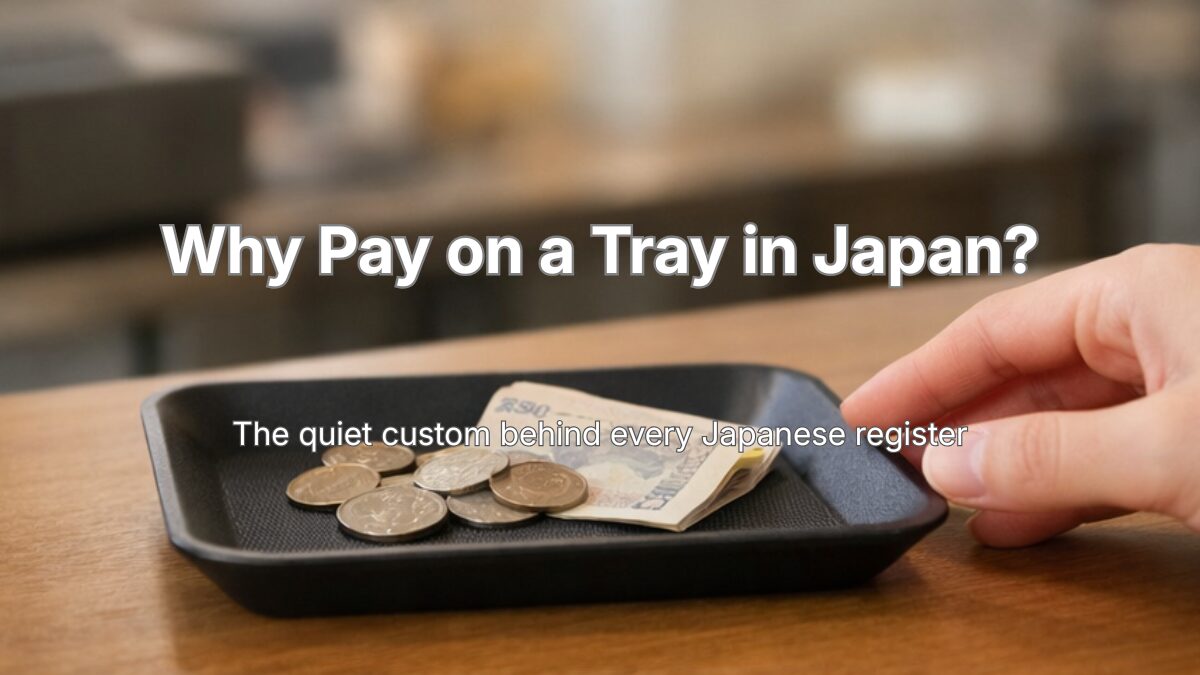
You hand your money to the cashier, and they point to a small tray on the counter instead of taking it from your hand. What's going on? This page explains why Japanese shops use a payment tray, where the habit comes from, and what to do when there isn't one. Why Japan uses a payment tray In Japan, money has traditionally been treated as something more than a simple transaction tool. There's a long-standing cultural sense that money is clean, even sacred — something to be handled with care and respect rather than passed casually from hand to hand. This ...
2026/3/20 topic-accommodation
You're heading out for the day, and the ryokan staff gestures toward the front desk — they'd like you to leave your room key. In many Western hotels, this would feel unusual. In Japan, it's completely normal. This page explains why the practice exists, how locals think about it, and what to do if you'd prefer to keep the key with you. Why this practice exists At a ryokan, guest services are timed around your schedule — dinner is served at a set hour, futons are laid out while you're at the bath, and breakfast is prepared based on when ...
2026/3/20 topic-accommodation
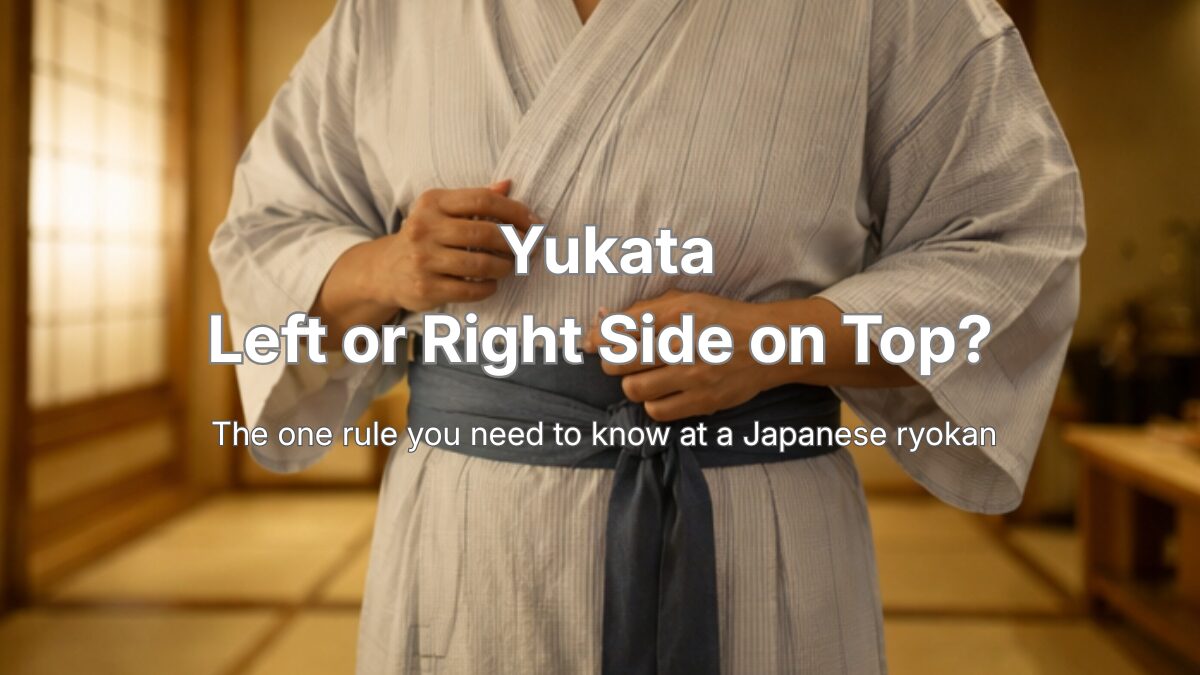
Your ryokan has provided a yukata — the lightweight cotton robe worn at Japanese inns. But which side goes on top? And does it actually matter? It does. This page explains the correct way to wrap a yukata, why it's easy to get confused, and a simple check you can do to confirm you've got it right. Why people get confused The most common source of confusion is the word "left." When someone says "left side on top," they mean your left — from your own perspective as you're wearing it. To a person facing you, your left side appears ...
