Explore Hokkaido: Practical Guides for First-Time Visitors

Hokkaido is beautiful, but winter and distance can make plans fragile.
Use these shelves to browse by situation—winter, transport, local rules, and seasonal events.
If you’re in a hurry, start with Help Now.


Help Now

All Hokkaido posts

Local Life & Etiquette

2026/7/26

Night Bus Etiquette in Japan: What to Know Before You Ride

Night buses in Japan are cheap, punctual, and surprisingly comfortable — and they come with an unspoken agreement: everyone on board is trying to sleep. If it's your first time, the rules aren't complicated, but knowing them in advance makes the difference between a smooth night and an awkward one. Here's the full picture. Why Etiquette Matters More on a Night Bus A night bus is not just transportation. After the lights go out, it becomes a shared sleeping space — strangers spending four to ten-plus hours at close range, all with the same goal. Most etiquette rules are simply about not disturbing other passengers. Bus companies set a lights-out time and explain the rules in onboard announcements, so you won't be guessing. Before Lights-Out: What's OK Quiet conversation: may be acceptable before lights-out, but keep it brief and pay attention to the people around you — some passengers start sleeping immediately Phone calls: finish them before boarding. Many operators ask passengers to refrain from calls inside the bus Food: many buses allow food, but rules vary. If you eat before lights-out, choose something quiet, easy to handle, and without a strong smell — and eat fast food or cup noodles before you board, not on it Rest stops: these vary by route. Some buses stop one or more times, while others have an onboard toilet or no passenger break at all. Check the route information before booking After Lights-Out: The Three Rules The Reclining Seat Question Reclining is a normal feature of most night-bus ...

ReadMore

Local Life & Etiquette

2026/7/26

Can You Drink Alcohol in Public Parks in Japan?

You've seen the photos: groups spread out under cherry blossoms with beer and sake, laughing in a public park. So is drinking in Japanese parks simply allowed? The honest answer is: often yes, sometimes no, and the difference is decided park by park. Here is how to tell which situation you're in. The Short Answer: Not Banned Nationwide, but Local Rules Apply Japan has no national law that prohibits drinking alcohol in public parks. That is why park drinking exists here in a way it doesn't in some countries. But "not banned nationwide" is not the same as "allowed in this park." What actually decides it: Each park's own rules, set by whoever manages it Local government ordinances, which can restrict drinking in specific areas — including parks Temporary rules during events or busy seasons So the real skill is not knowing the law — it's checking the rules of the specific park in front of you. Hanami Is Common, but Check the Park Rules During cherry blossom season, drinking under the trees is a familiar sight in many parks, and some parks publish detailed hanami guidelines each year — covering things like reserving space, open flames, loud speakers, and trash separation. But not every park allows it. Some famous blossom spots — certain traditional gardens and managed facilities — prohibit alcohol entirely. Park rules are also updated year by year, so the entrance signs and the park's official website are your most reliable sources, not last year's blog posts. Where Drinking Is Restricted Parks ...

ReadMore

Local Life & Etiquette

2026/7/26

How to Thank Someone for Helping You in Japan

A stranger walks you two blocks to the station entrance you couldn't find. Someone chases you down the street with the phone you left on the bench. Now what? In some countries you might offer money; in others a hug. In Japan, the answer is simpler than you might expect — and knowing it saves you from an awkward moment. The Basic Formula: Words + a Small Bow The core move is this: "ありがとうございます" (Arigatō gozaimasu) plus a small nod of the head. The bow does not need to be deep — a light bow is plenty. On the two forms of "thank you": Arigatō gozaimasu works in almost any situation Arigatō gozaimashita (past form) is also natural when the help has finished or when you are saying goodbye You don't need to overthink the difference — either will be understood warmly. And if Japanese feels like too much in the moment, a clear "Thank you so much!" in English carries the message just fine. The language is not the point; the acknowledgment is. Should You Offer Money for Everyday Help? Usually Not For directions or ordinary help from a stranger, do not feel that you need to offer cash. A clear thank-you is normally enough. In fact, offering money for everyday kindness tends to backfire: most people will be surprised and refuse, and the moment becomes awkward for both of you. During your trip, for ordinary kindness, words are the currency — and the exchange is complete when you say them. When Someone Went ...

ReadMore

Local Life & Etiquette

2026/7/26

Should You Open a Gift Immediately in Japan?

Someone hands you a beautifully wrapped gift. Your instinct might be to open it right away and show how happy you are — but the other person seems to expect you to just... put it away? Or maybe they're waiting for you to open it? Here is how gift-opening actually works in Japan, and the one question that solves most of the confusion. The Traditional Custom: Opening It Later Traditionally, especially in formal situations, the recipient might thank the giver and open the gift later, after the giver has left. One practical reason: opening the gift later can avoid putting immediate attention on its price, contents, or the recipient's reaction — which protects both sides from an awkward moment. In some cultures and social settings, opening a personal gift immediately is a common way to show appreciation. This difference can make the Japanese approach feel unfamiliar at first — the quiet "thank you, I'll treasure this" can even look like disinterest if you are expecting an on-the-spot reaction. It isn't. The Answer Depends on the Type of Gift More than age or generation, what matters is what kind of gift it is and where you are: A personal birthday gift from a friend: opening it on the spot is not unusual at all. If the giver seems eager to see your reaction, opening it is often the natural move A temiyage (a small gift brought when visiting someone's home): thank them first; whether it gets opened right away depends on the situation. If it is ...

ReadMore

Local Life & Etiquette

2026/7/26

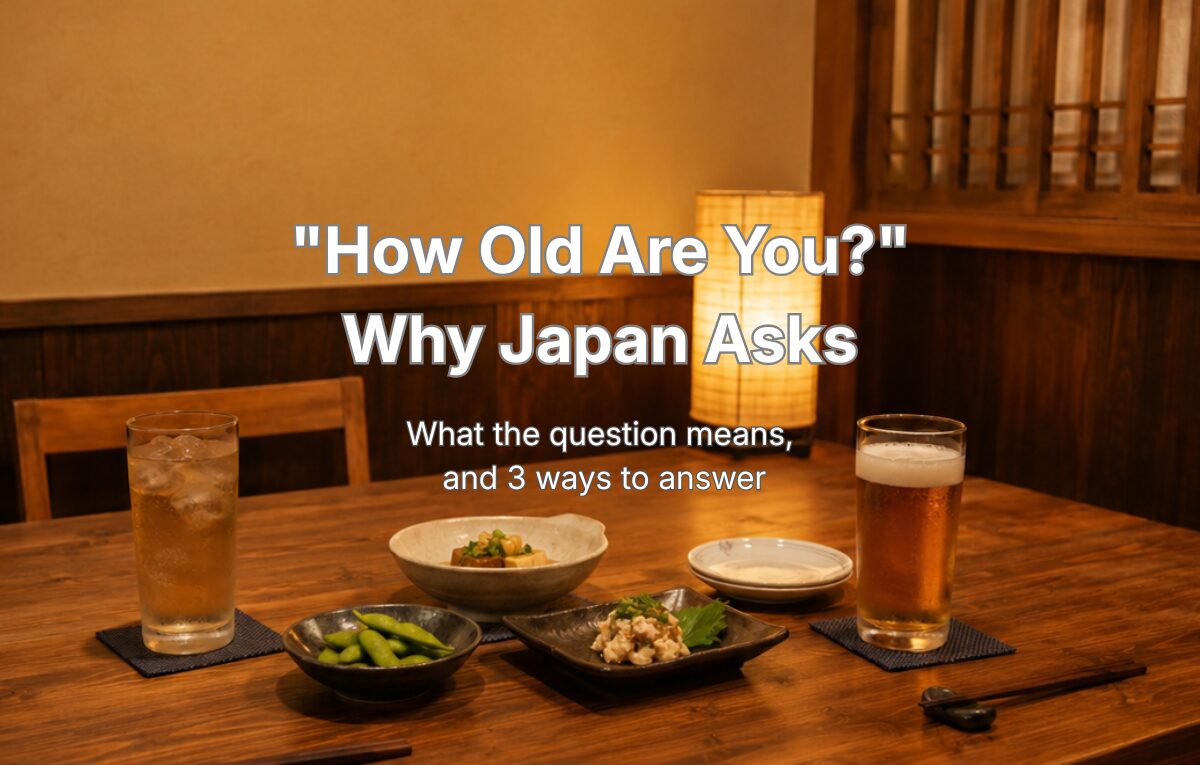
Why You May Be Asked Your Age in Japan (And How to Respond)

You're chatting with someone at an izakaya, the conversation is going well, and then: "How old are you?" If that question would feel out of place where you come from, the moment can be jarring. Here is why the question comes up in Japan, what it usually means, and how to respond — including how to not answer. Why Do People Ask? There are a few common reasons, and none of them is usually about prying: To understand the relationship. Japanese social relationships sometimes reflect age, school year, workplace seniority, or position. Knowing roughly where someone stands can be one clue — though politeness in Japanese depends on many things, including whether you have just met, not on age alone To find common ground. Learning you are the same generation opens easy topics: music, school days, work, family. This is probably the most common reason in casual conversation As simple small talk. Some people ask with no deeper intent at all — in the same spirit as asking where you are from or what you do One possible reason behind the question is that the person is trying to understand the relationship or find an easy topic of conversation. You are more likely to hear it in casual social settings — a bar counter, an exchange event, a homestay, a longer chat with a local — than in formal service or business interactions. Is It Rude? It Depends on Where You're From In some cultures, asking an adult's age can feel unusually personal, so it ...

ReadMore

This section shows every post tagged region-hokkaido.


Browse all Hokkaido posts