
Latest Japan Guide Updates
Browse all Japan Guide posts →
Japan Guide
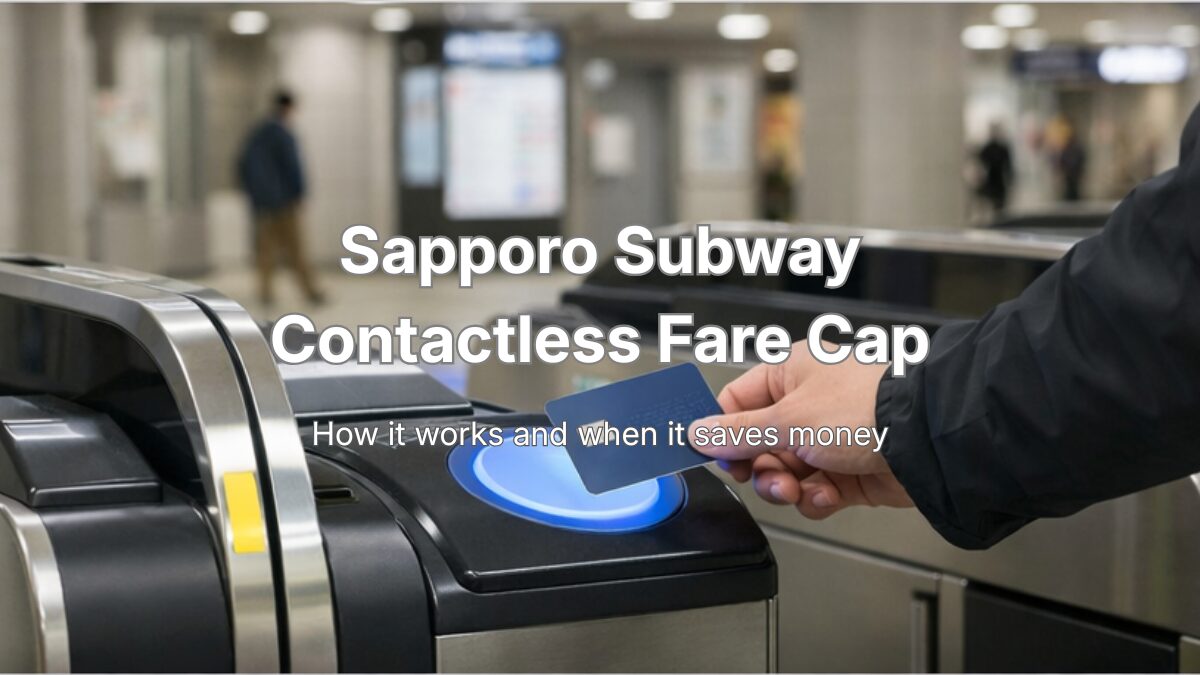
How Sapporo Subway’s Daily Fare Cap Works with Contactless Payment
Sapporo Subway now offers a daily fare cap for contactless payment. If you use the same card throughout the day, your total fare stops at a fixed amount. Even in Sapporo, though, people do not always buy a day pass first. If you are not sure how many rides you will take, you may simply start moving and only realize later that the day pass would have saved money. This is even more true for travelers. During a trip, it is not always easy to know in advance how many times you will use the subway that day. That is why this system can be very useful. It makes things easier for people who do not want to stop and think about which ticket to buy or how much they should pay. At the same time, it does not cover JR trains, buses, or streetcars. So before you rely on it, it helps to understand both its convenience and its limits. What the New Fare Cap Means for Subway Riders in Sapporo Sapporo Subway’s new daily fare cap means that if you use contactless payment, your total fare for the day stops at a fixed amount. If you keep using the same credit card, debit card, or other supported payment method at the ticket gate, once your total reaches the daily limit, no extra fare is added after that. The daily cap is 830 yen on weekdays and 520 yen on weekends and public holidays. The base subway fare in Sapporo starts at 210 yen, ...

3-Minute Train Transfers in Japan: Can You Make It?
You're checking your route on Google Maps and it shows a 3-minute transfer. Is that even possible? Should you pick a different train? This page explains how Japan's transfer system actually works, how locals think about short connections, and when it's smarter to choose the next train from the start. How Japan's transfer times are calculated Japan's train timetables are precise, and transfer times shown in apps like Google Maps or Hyperdia are calculated based on actual walking distance between platforms. When an app says "3-minute transfer," it means a healthy adult walking at a normal pace can make it. The system assumes no delays, no luggage difficulties, and familiarity with the station layout. How locals think about short transfers Most Japanese travelers read a 3-minute transfer as "tight but doable" — but they quickly run through a mental checklist before committing to it. Step-by-step: how to handle a short transfer If you're traveling with heavy luggage A 3-minute transfer with a large suitcase is a different situation entirely. Escalator queues, elevator wait times, and narrow passages all add up quickly. Bottom line A 3-minute transfer in Japan is not impossible — the timetable is designed with that time in mind. At a small or mid-size station, with light luggage and outside of rush hour, you'll make it at a normal walking pace. At large terminal stations, with heavy bags, or during rush hour, the smarter move is to choose the next train from the start. In Japan, the next train is never far away.
Subway Exits in Japan: How to Choose the Right One
Tokyo and Osaka subway stations can have more than ten exits. For first-time visitors, choosing the right one can feel overwhelming — especially underground, with limited signal and a lot of signs. This page explains how locals handle it, and the fastest way to get yourself to street level without confusion. Why are there so many exits? Large subway stations in Japan are connected directly to multiple buildings, intersections, and underground passages. Each exit leads to a different part of the surrounding area. This is not unique to tourists — Japanese people also look up the exit number before arriving at an unfamiliar station. The system is logical once you know how to read it, but it's not intuitive on first encounter. How locals choose their exit Most locals check the exit number before they even get on the train. Here's how they do it: Step-by-step: how to choose your exit A few things worth knowing Bottom line Too many exits is a normal part of using the subway in Japan. Locals deal with it the same way: check Google Maps, look at the station map, and don't overthink it. If you come out at the wrong exit, you haven't made a serious mistake. A quick GPS check above ground is all you need to get back on track.
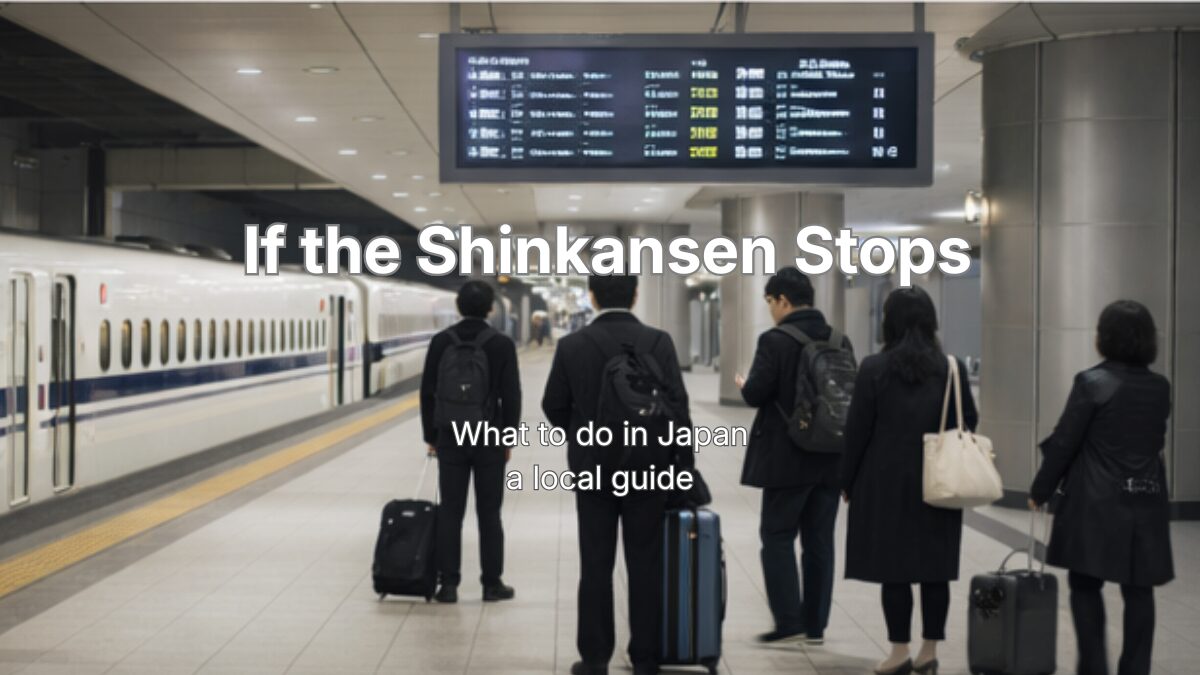
If the Shinkansen Stops: What to Do and How Locals Handle It
The Shinkansen is one of the most reliable train systems in the world. But when it does stop, it can catch travelers off guard — especially if you have a tight connection, a flight to catch, or a packed itinerary. This page explains what actually happens, what locals do, and how to make a calm decision in the moment. Why the Shinkansen stops There are three main reasons the Shinkansen suspends service: What locals do when it stops When the Shinkansen stops unexpectedly, most Japanese travelers do one thing first: they wait and listen. Stations will announce an estimated resumption time — in Japanese, and often in English at major stations. Locals use that estimate to decide what to do next. Step-by-step: how to handle it Can you get a refund? Yes, in most cases — but the rules depend on how long the delay was. What not to do Don't immediately take a taxi. Taxis are expensive for long distances, and traffic conditions during disruptions can be unpredictable. Don't rely on unofficial information. Social media and travel forums may have outdated or incorrect details. Stick to JR official channels. Don't leave the station before checking substitute transport. Once you exit, you may lose access to the free alternatives JR provides. Bottom line When the Shinkansen stops, the smartest move is usually to wait and gather information before acting. Japan's rail system is well-prepared for disruptions. Substitute transport, refund procedures, and English announcements are all part of how the system handles these situations. If you ...
How to Decide Whether to Extend Your Stay When Snow Disrupts Travel in Hokkaido
In Hokkaido, transportation can become unstable in different ways. Sometimes snow builds up over several days and conditions gradually worsen. Other times, heavy snowfall during the night can suddenly disrupt trains and flights the next morning. In both situations, there is a moment when you are no longer sure whether you can move as planned. You may think, “I’ll wait and see.” Or, “I’ll try to move anyway.” That reaction is natural. However, once travel becomes uncertain, extending your stay becomes a realistic option to consider. Staying longer is not a failure of planning. It is simply an adjustment based on changing conditions. In this article, I’ll help you organize how to think about extending your stay when transportation becomes unstable. Moving is not always the best choice. In some cases, staying where you are can bring more stability to your trip. Why Extending Your Stay Is Not a Failure of Planning Changing your plans during a trip can feel uncomfortable. If you have a return flight or a train to another city, extending your stay may feel like something went wrong. However, winter conditions in Hokkaido can affect transportation in ways that are outside your control. This is not about poor preparation. It is about adapting to changing conditions. When travel becomes uncertain, adjusting your decision is often the more realistic response. Plans are not fixed. They are based on assumptions. If those assumptions change, the plan can change as well. Extending your stay is not giving up. It is one way to avoid ...
Explore Next
If you’re not sure where to go next, start here.
