
Latest Japan Guide Updates
Browse all Japan Guide posts →
Japan Guide
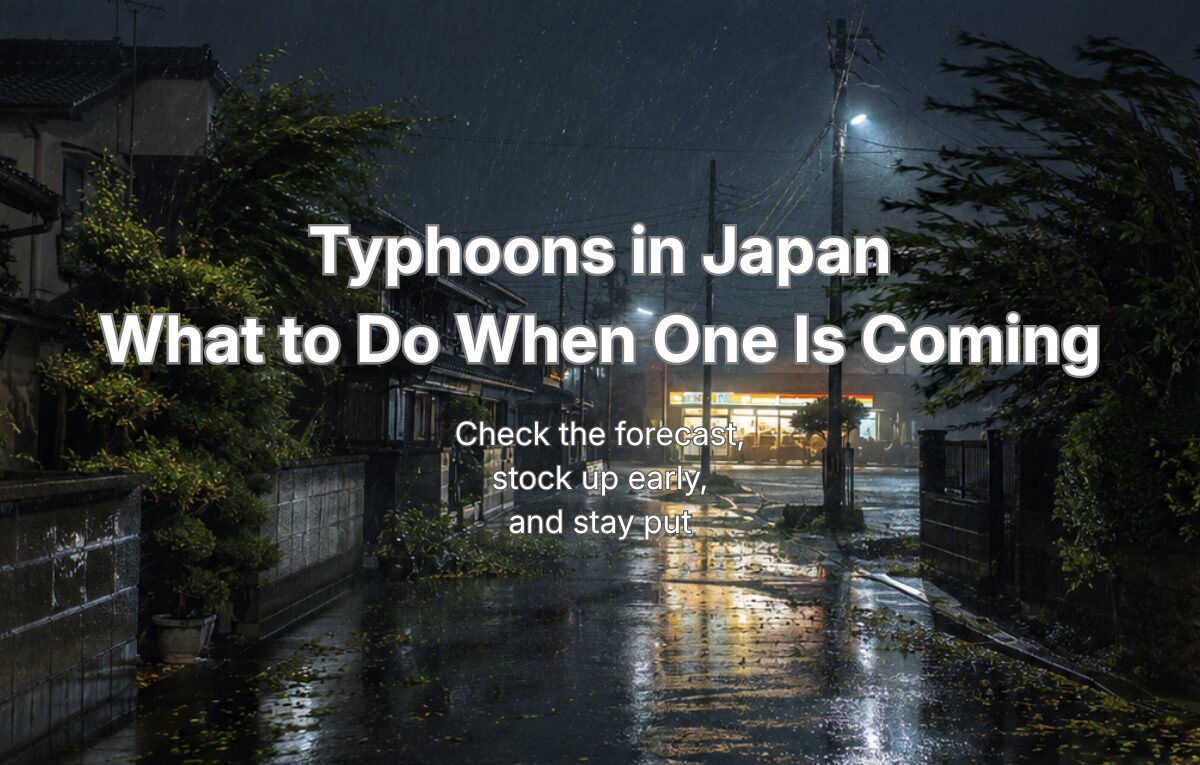
Typhoons in Japan: What to Do When One Is Coming
When Do Typhoons Hit Japan? Typhoon season in Japan runs roughly from July to October, with August and September seeing the most frequent landfalls and close approaches. The exact timing, track, and intensity vary significantly from year to year — where a typhoon hits depends entirely on its path, so the regions most commonly affected (Okinawa, Kyushu, Shikoku, the Tokai coast, and the Kanto area) are not always the ones impacted in any given storm. Checking current forecasts from official sources as a typhoon develops gives a much more accurate picture than general seasonal expectations. What Happens to Transportation? As a typhoon approaches, train services — including shinkansen — may be suspended when wind speeds exceed safe operating thresholds. Airlines cancel or reschedule flights. Highways and ferry routes close. This is called keikaku unkyuu (planned suspension), and operators announce decisions in advance when possible. Announcements typically come out sometime between the day before and the morning of the storm, but timing varies by operator and line. Do not wait for official confirmation before making alternative plans — check your route's operator directly and assume disruption is possible. How to Stay Safe Stay indoors — once the storm is close, the safest place is inside your accommodation Do not use an umbrella in strong wind — it will not help and can become a hazard; if you must go outside briefly, move in short bursts between sheltered spots Stay away from rivers, coastlines, and low-lying areas — flooding and storm surge develop quickly and without much ...
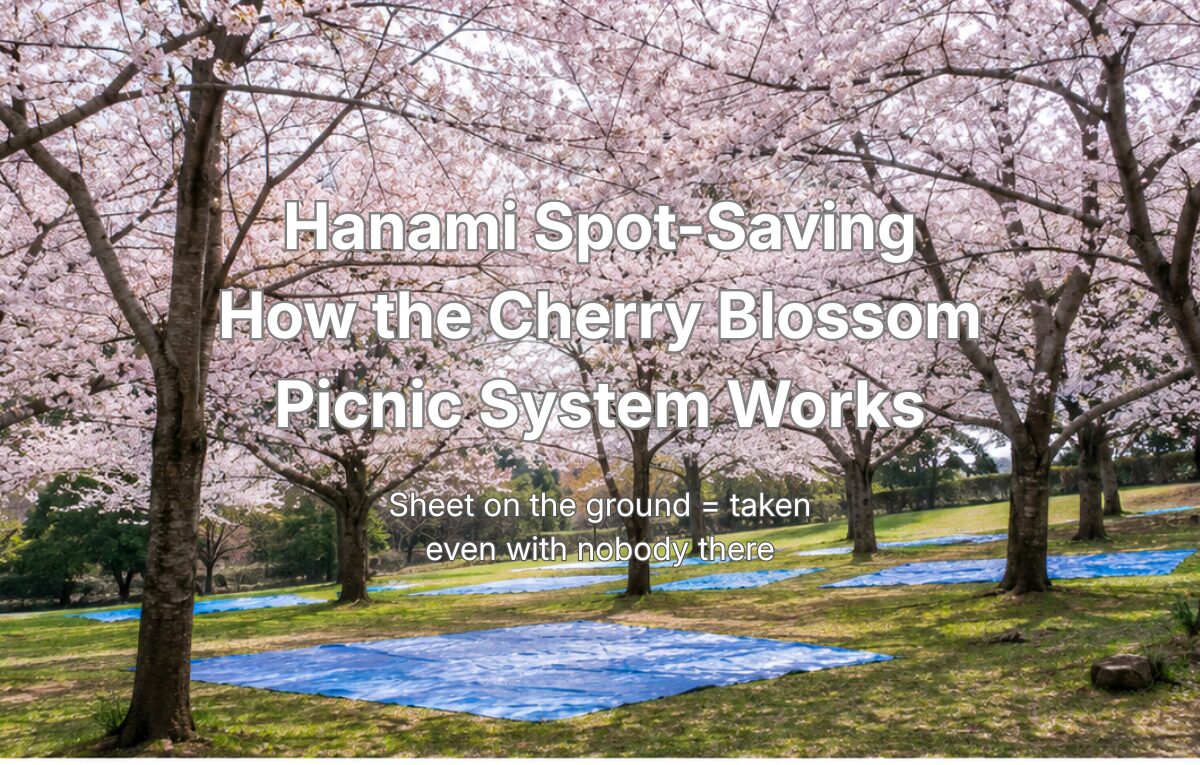
Hanami Spot-Saving in Japan: How the Cherry Blossom Picnic System Works
What Is Hanami? Hanami (花見) means "flower viewing" — specifically, the tradition of gathering under cherry blossom trees to eat, drink, and enjoy the bloom. It is one of the most widely participated seasonal events in Japan, involving families, friends, and colleagues. Timing depends on location. In Tokyo, peak bloom is usually late March to early April. In Hokkaido, it comes later — late April to early May. The window is short, which is part of why the atmosphere around it is so concentrated. How Does Spot-Saving Work? At popular hanami parks, good spots fill up fast. The solution is simple: someone from the group arrives early — sometimes very early — spreads a sheet on the ground, and holds the space until everyone else shows up later in the day. At company hanami events, this task sometimes falls to junior staff. But whoever does it, the system is consistent: sheet down means the space is reserved. The key thing for visitors to understand: a sheet on the ground is not an abandoned sheet. Even if the space looks empty, it is in use. Sitting on it, moving it, or placing your own items on top of it is not acceptable. What Should Travelers Do? Joining in is easy — hanami does not require an invitation or a reservation. A few practical points: Timing — weekday mornings and later evenings tend to be less crowded than weekend afternoons at peak bloom Location — famous spots like Ueno Park or Maruyama Park get very busy; neighbourhood ...
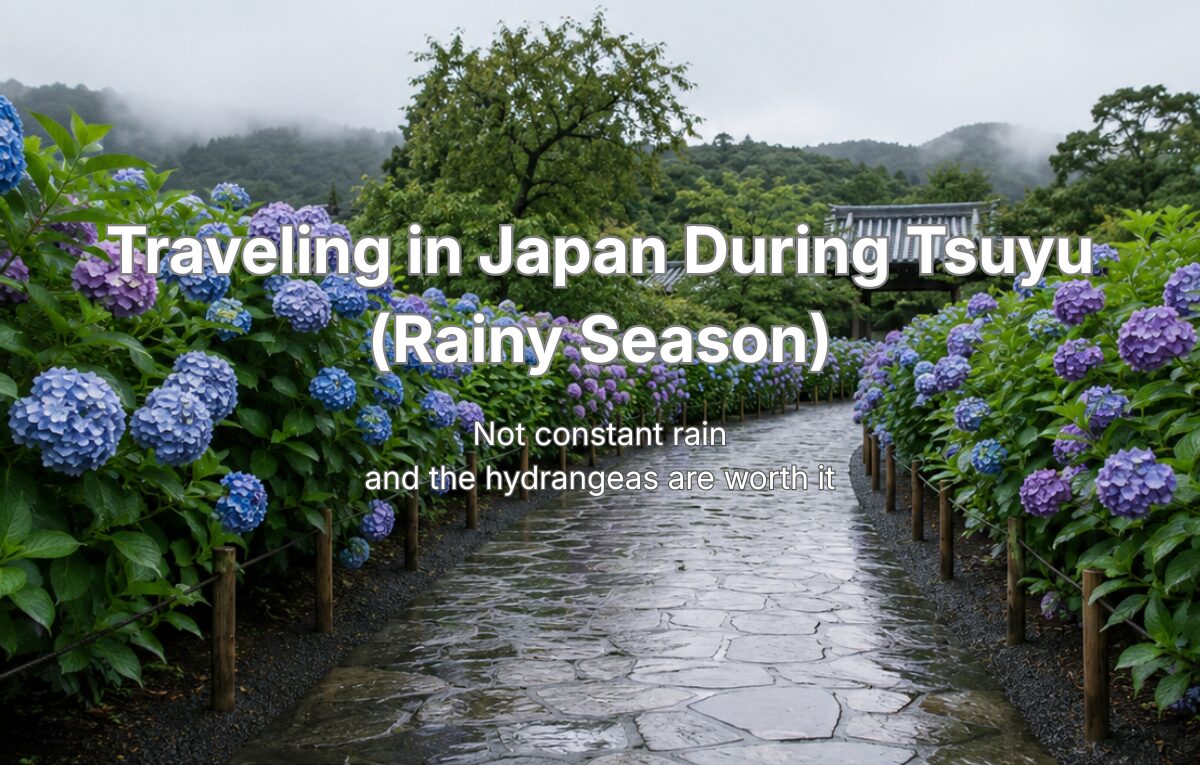
Traveling in Japan During Tsuyu (Rainy Season): What to Expect
What Is Tsuyu? Tsuyu (梅雨) is an annual weather pattern that brings extended periods of cloud and rain to much of Japan. It typically arrives in June and eases in early July across mainland Honshu, though timing and intensity vary by year and region. Okinawa enters the rainy season earlier, usually around May. Hokkaido largely escapes it. The amount of rain and the duration differ significantly from year to year — some years are mild, others bring sustained heavy downpours. Checking a forecast closer to your travel date gives a much more accurate picture than planning around the average. What's the Weather Actually Like? Not constant heavy rain. A typical tsuyu day might be overcast with occasional light rain, a brief downpour in the afternoon, and a dry hour in between. Stretches of several dry days are also common within the season. Temperatures run roughly 20–28°C, but the humidity is high — higher than the thermometer suggests. The combination of warmth and moisture makes it feel more uncomfortable than the number alone implies. What to Pack Compact folding umbrella — essential; rain arrives without much warning and convenience store umbrellas work fine if you forget Water-resistant or quick-drying shoes — waterproof trainers or walking shoes that dry fast are the most practical choice for city travel; sandals can work in some situations but leave feet exposed in heavy rain Quick-dry clothing — synthetic or linen fabrics dry much faster than cotton; useful for both rain and sweat Small towel — for wiping down after getting ...
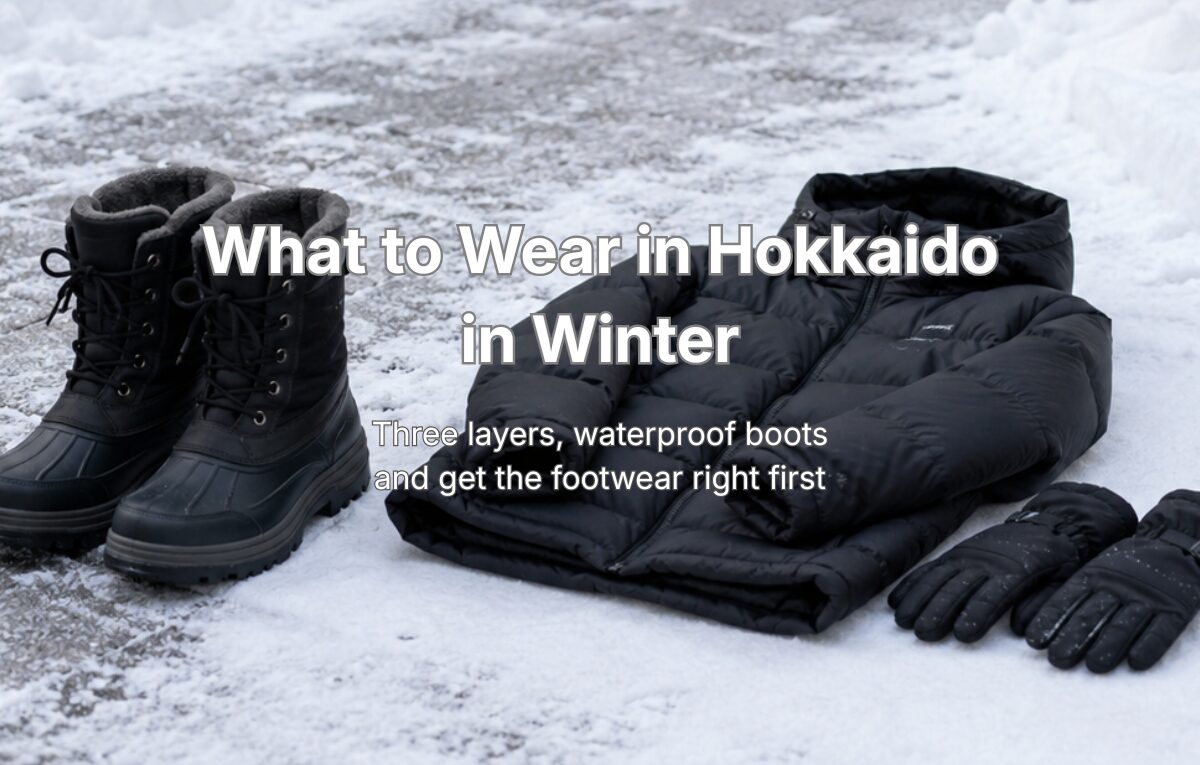
What to Wear in Hokkaido in Winter: A Practical Packing Guide
How Cold Is It Really? Sapporo's average temperature in January sits a few degrees below zero, but wind chill pushes the felt temperature lower. Inland cities experience considerably harsher conditions. The exact temperature depends heavily on where you are going and when. One thing that catches visitors off guard: the contrast between outside and inside. Buildings, trains, and shops in Hokkaido are well-heated — often very warm. You will be moving between extreme cold and comfortable warmth repeatedly throughout the day, which is exactly why layering matters. The Three-Layer System What About Footwear? This is where most visitors underestimate the conditions. Hokkaido pavements in winter are a mix of compacted snow, ice, slush, and refrozen melt — often within the same block. What you need: Waterproof — snowmelt soaks through non-waterproof shoes quickly Non-slip sole — flat-soled shoes offer almost no grip on ice; look for boots with textured or rubber soles designed for winter Insulated — cold enters through the feet faster than most people expect Trainers, leather shoes, and fashion boots with smooth soles are all genuinely difficult to manage. A waterproof winter boot or insulated trekking boot with grip is the right choice. Even locals slip on bad days — the surface is not forgiving. Accessories That Matter Hat that covers the ears — essential; heat loss through an uncovered head is significant in these temperatures Gloves — waterproof if possible; hands get cold fast when handling bags, cameras, or phones outside Scarf or neck warmer — makes a noticeable difference when ...
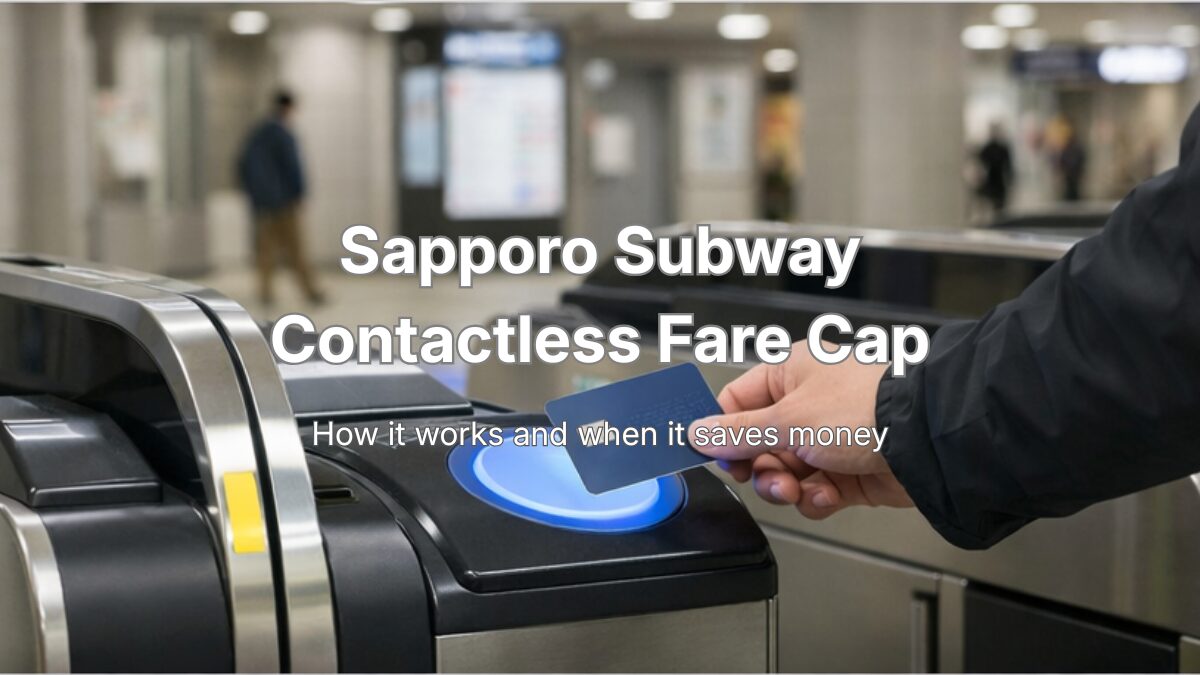
How Sapporo Subway’s Daily Fare Cap Works with Contactless Payment
Sapporo Subway now offers a daily fare cap for contactless payment. If you use the same card throughout the day, your total fare stops at a fixed amount. Even in Sapporo, though, people do not always buy a day pass first. If you are not sure how many rides you will take, you may simply start moving and only realize later that the day pass would have saved money. This is even more true for travelers. During a trip, it is not always easy to know in advance how many times you will use the subway that day. That is why this system can be very useful. It makes things easier for people who do not want to stop and think about which ticket to buy or how much they should pay. At the same time, it does not cover JR trains, buses, or streetcars. So before you rely on it, it helps to understand both its convenience and its limits. What the New Fare Cap Means for Subway Riders in Sapporo Sapporo Subway’s new daily fare cap means that if you use contactless payment, your total fare for the day stops at a fixed amount. If you keep using the same credit card, debit card, or other supported payment method at the ticket gate, once your total reaches the daily limit, no extra fare is added after that. The daily cap is 830 yen on weekdays and 520 yen on weekends and public holidays. The base subway fare in Sapporo starts at 210 yen, ...
Explore Next
If you’re not sure where to go next, start here.
