Hokkaido is beautiful, but winter and distance can make plans fragile.
Use these shelves to browse by situation—winter, transport, local rules, and seasonal events.
If you’re in a hurry, start with Help Now.
-
Winter Survival
Snow, cold, delays, and how locals adapt when plans break.
-
Transit & Logistics
Trains, buses, airport access, and what still works during disruptions.
-
Local Life & Etiquette
Quiet rules that surprise travelers—what to do, what not to do, and why.
-
Events & Seasons
What to expect on the ground: crowds, timing, access, and small risks.
-
Food Culture
Practical food tips: ordering, allergies, payment, and common mistakes.
-
Niche Interests
Smaller topics that don’t fit standard guides—still useful if it’s your thing.
All Hokkaido posts
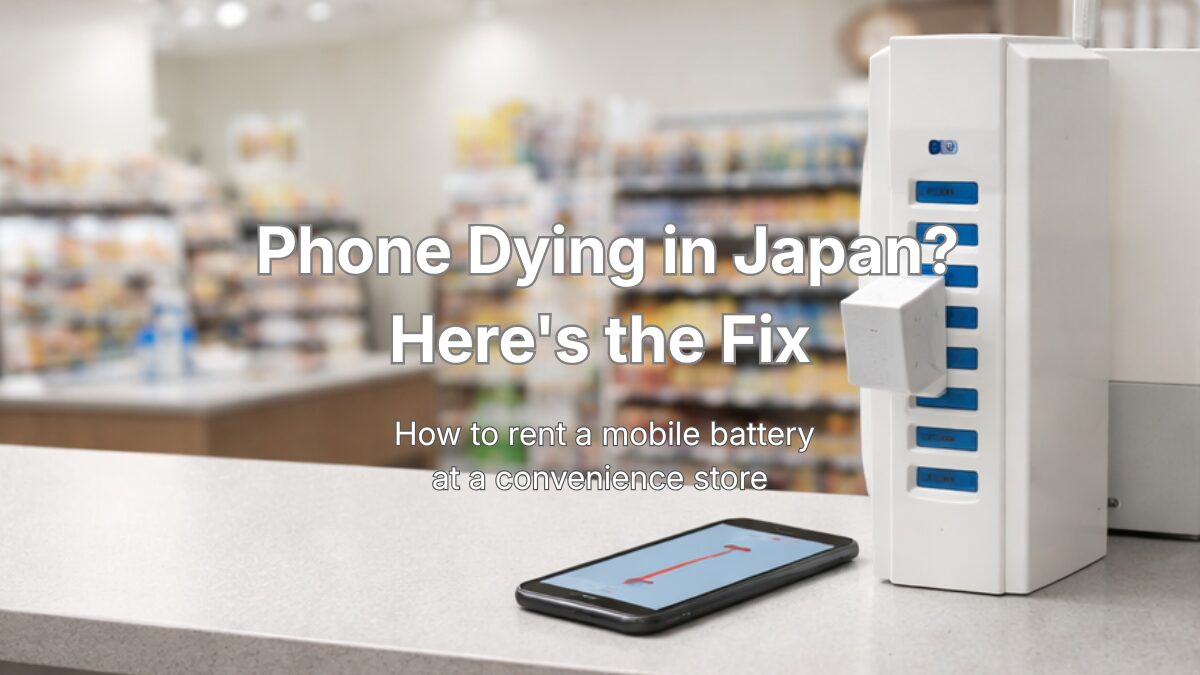
ChargeSPOT in Japan: How to Rent a Mobile Battery When Your Phone Is Dying
Your phone battery is running low in the middle of a sightseeing day — and you don't have a charger or a place to plug in. In Japan, there's a practical solution that most locals already know about. This page explains how Japan's mobile battery rental service works, where to find it, and what to do before your battery hits zero. What ChargeSPOT is ChargeSPOT is a short-term mobile battery rental service. Instead of hunting for an outlet or carrying your own power bank, you borrow a charged battery from a kiosk, use it while you move around, and return it to any other kiosk when you're done. It's available at thousands of locations across Japan — convenience stores, train stations, shopping malls, and cafes. The most reliable place to find one is at any major convenience store chain. How to use ChargeSPOT: step by step How much does it cost? Built-in cables — no adaptor needed Each ChargeSPOT battery includes three built-in cable types: Lightning — for iPhone (older models) USB-C — for Android and newer iPhone models Micro USB — for some older Android devices You don't need to bring your own cable — the battery works with most smartphones as-is. Other options if ChargeSPOT isn't available Bottom line ChargeSPOT solves the dead battery problem without requiring an outlet or your own power bank. Download the app before your trip, and you'll have a reliable backup wherever a convenience store is nearby — which in Japan, is almost everywhere. The one preparation that ...
Why Google Maps Travel Times Feel Wrong in Japan — and What to Do About It
You checked Google Maps before leaving, but you're running late — even though you followed the route exactly. What happened? This page explains why Google Maps travel times can feel off in Japan, when to add extra time, and which apps locals actually use for train navigation. Why Google Maps times can feel wrong Google Maps calculates travel time based on a set of assumptions that don't always match real conditions: In practice, most travel situations in Japan involve at least one of these variables — which is why the displayed time often ends up being the minimum, not the realistic estimate. When Google Maps tends to underestimate How locals adjust for this Japanese people use Google Maps regularly — but they don't take the displayed time at face value for unfamiliar routes or complex transfers. The mental adjustment looks roughly like this: Which apps locals actually use For train navigation in Japan, a dedicated transit app gives more detail than Google Maps — particularly for transfers, platform numbers, and exit guidance. When Google Maps is reliable Google Maps is accurate enough in straightforward situations: Simple routes with no transfers Familiar stations you've used before Light luggage and off-peak hours Walking directions in areas with clear street layouts In these cases, the displayed time is close to reality and you can trust it without adjustment. Bottom line Google Maps shows the fastest time under ideal conditions — not the realistic time for a first-time visitor navigating an unfamiliar station with luggage. Adding 10–15 minutes of ...
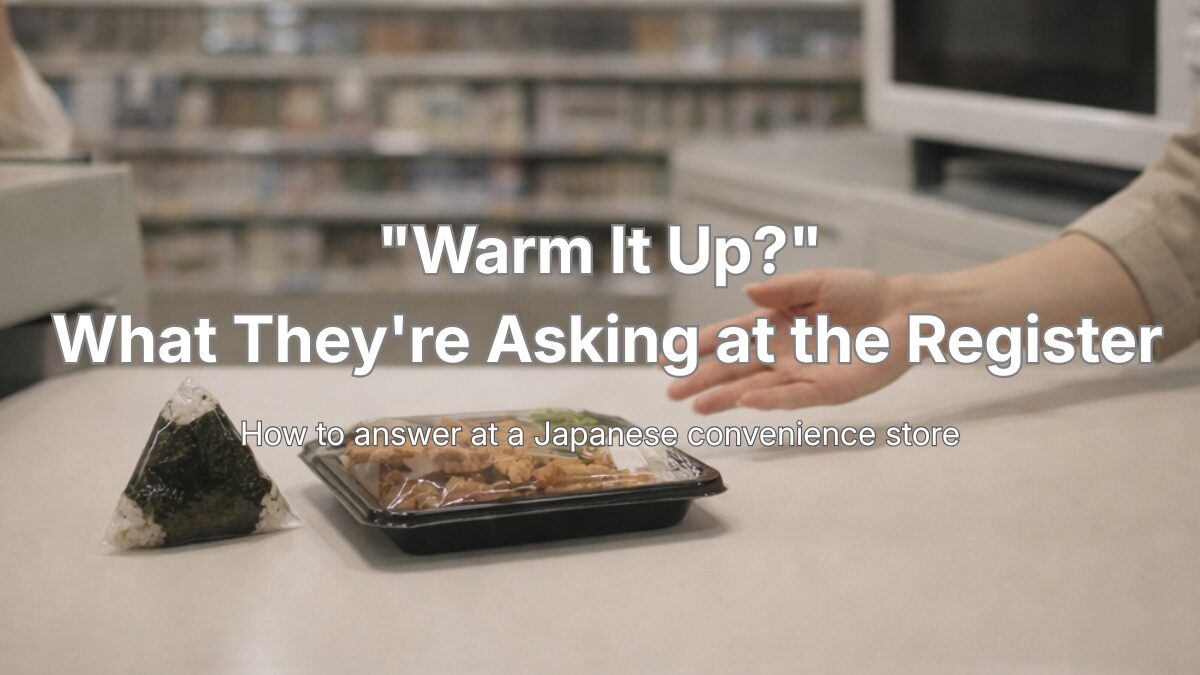
"Warm It Up?" — What Japanese Convenience Store Cashiers Are Asking
You're at a Japanese convenience store register with a bento box or onigiri, and the cashier says something you don't quite catch. Are they asking if you want it warmed up? This page explains what the question means, how to answer it, and what kinds of food can actually be heated. Why convenience stores offer this Japanese convenience stores have a microwave at or near the register, and heating purchased food on the spot is a standard part of the service. This is unique to Japan's convenience store culture — it's not something you'd typically find at a convenience store in most other countries. The system is simple: if your item is eligible, the cashier will ask. You say yes or no. They heat it while you finish paying, and hand it back warm. What can be warmed up? Not everything is eligible — only certain chilled or room-temperature items are heated by microwave at the register. Phrases you might hear Staff at different convenience stores may phrase the question slightly differently — but they all mean the same thing. Step-by-step: how to respond Bottom line 「温めますか?」is one of the most common things you'll hear at a Japanese convenience store register. It's a simple yes or no — and a nod or shake of the head works just as well as words. If you're buying a bento or a chilled meal and you'd like it warm, say yes. It's one of the small conveniences that makes Japan's convenience stores genuinely convenient.
Phone Calls on Trains in Japan: What You Should Know Before Your Phone Rings
Your phone rings on a Japanese train. Everyone around you is quiet. What's the right thing to do? This page explains the unwritten rule about phone calls on Japanese trains, why it exists, and how locals handle it — including what to do when you genuinely need to talk. Why phone calls aren't allowed Japanese trains are treated as shared quiet spaces. The expectation — announced on most lines — is that passengers set their phones to silent and avoid calls out of consideration for others. This isn't a legal rule, but it's one of the most consistently observed social norms in Japan. Even Japanese passengers who break other minor conventions tend to follow this one. How locals handle an incoming call When a phone rings on a Japanese train, most locals follow a predictable pattern — and it happens quickly and quietly. Step-by-step: what to do What about texting and messaging? Texting, messaging apps, and browsing are completely fine on Japanese trains. You'll see most passengers doing exactly this. The restriction is specifically on voice calls — the sound of a one-sided conversation in a quiet carriage is what people find disruptive. If you need to communicate urgently, switching to text is the smoothest option and requires no explanation. A useful phrase Bottom line Phone calls on Japanese trains are one of the clearest social rules in the country — observed consistently by locals and expected of visitors too. It's not enforced by staff, but the social pressure is real and immediate. Decline the ...
Surviving Japan's Summer Humidity: What Locals Do and How to Stay Comfortable
Japan's summer heat is one thing. The humidity is another. Visitors from drier climates often find the combination genuinely difficult — not just uncomfortable, but physically draining in a way that can affect your whole trip. This page explains what makes Japanese summers so demanding, how locals manage it, and the practical steps that make a real difference. Why Japan's summer feels so intense After the rainy season (梅雨 / tsuyu) ends in early July, Japan comes under the influence of the Pacific high-pressure system — bringing sustained heat and high humidity that lasts through August. The problem with humidity is that it prevents sweat from evaporating efficiently. Your body's cooling system slows down, and heat builds up faster than you expect. For visitors from dry climates, this can feel overwhelming even at temperatures that would normally be manageable. How locals manage the summer heat Japanese people have developed a set of everyday habits for surviving summer that are worth adopting as a traveler. Step-by-step: how to structure your day Useful items to pick up in Japan Bottom line Japan's summer humidity is genuinely demanding — not something to push through with willpower alone. The locals who handle it well aren't tougher; they're just more deliberate about timing, hydration, and using the environment around them. Move in the cooler parts of the day, drink constantly, use cooling products, and let air-conditioned spaces work for you. A trip planned around the heat is almost always more enjoyable than one that ignores it.
This section shows every post tagged region-hokkaido.